Human Foods Maltese Should Never Eat
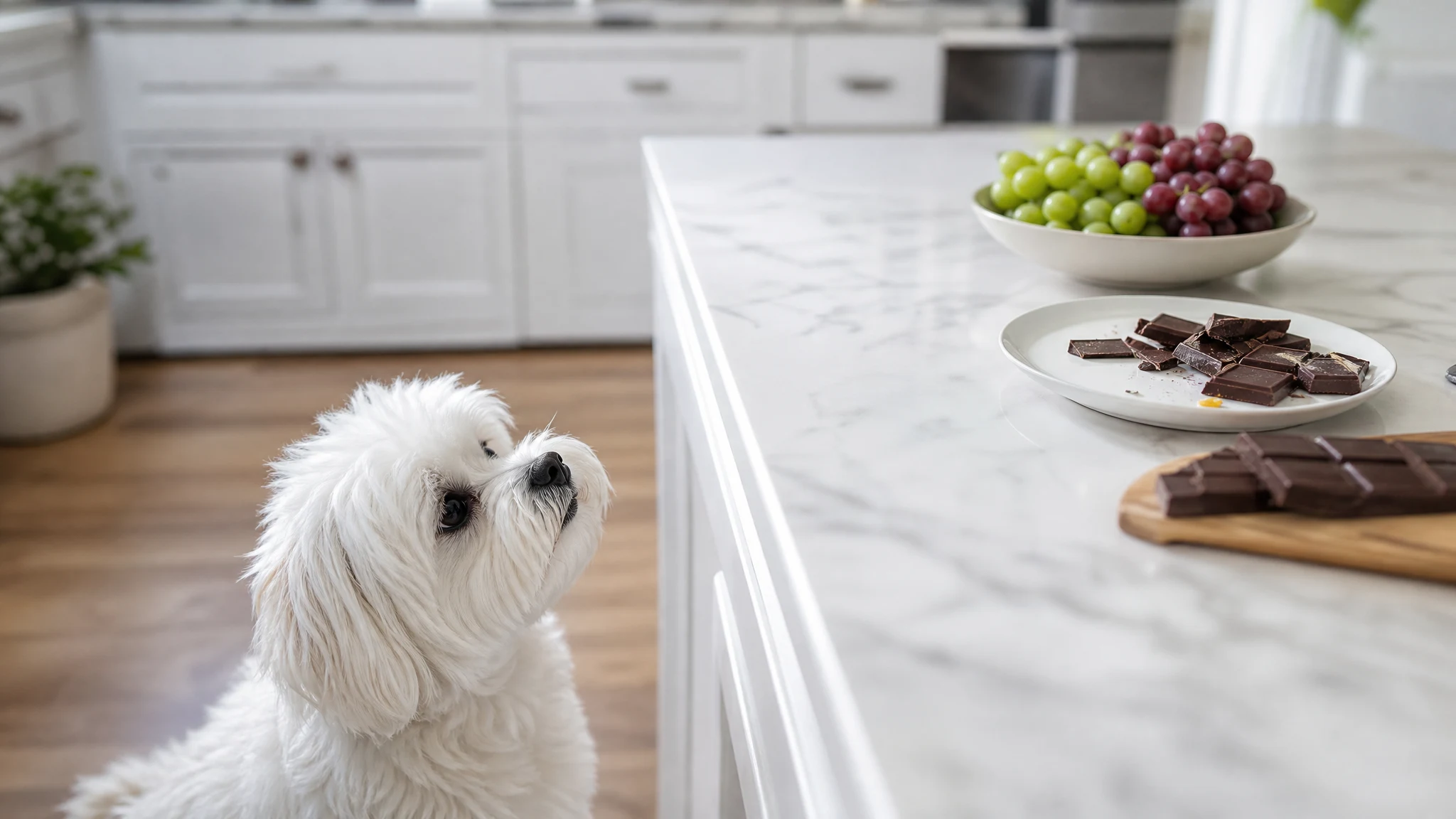
General nutrition information compiled from product labels and published sources, not veterinary advice. Your veterinarian is the right person to choose a diet for your dog, especially one with a health condition.
Many people ask what Maltese cannot eat, and the honest answer is a fairly short list of serious hazards plus a longer list of foods that are simply a bad fit for a small dog. The toxic items below come from the ASPCA Animal Poison Control list of foods that are dangerous to dogs. The Chewy breed guide lists the Maltese at under 7 pounds, so even a small bite of the wrong food is a larger share of the dog's body.
This page does not give doses or tell you how much is "too much." If your dog ate something on this list, skip to the emergency section and call for professional advice.
The most dangerous foods
1. Can Maltese eat chocolate?
No. The ASPCA lists chocolate as toxic to dogs, and that includes cocoa powder, baking chocolate and chocolate-flavored sweets. Darker and baking chocolate are generally described as the more concerning kinds, but none of it is a safe treat.
2. Can Maltese eat grapes or raisins?
No. The ASPCA lists grapes and raisins as dangerous for dogs and says the cause is not fully understood. That uncertainty is the reason to avoid them entirely, including in trail mix, baked goods and cereal.
3. Why is xylitol such a concern?
The ASPCA lists xylitol, a sweetener, as toxic to dogs. It shows up in some sugar-free gum, candy, baked goods and certain nut butters, so the ingredient list matters. Never assume a "sugar-free" or "natural" food is dog-safe without checking for it.
4. Can Maltese eat onions and garlic?
No. The ASPCA lists onions, garlic, chives and leeks as harmful to dogs, in raw, cooked or powdered form. This catches people out because the foods are often hidden in gravy, soup, broth and seasoned leftovers.
5. Are macadamia nuts dangerous?
Yes. The ASPCA lists macadamia nuts as toxic to dogs. Cookies and snack mixes containing them are best kept well away from your dog.
6. Can a Maltese have alcohol?
No. The ASPCA lists alcohol as dangerous to dogs, and that covers drinks, some desserts and raw yeast dough. Because a Maltese is so small, spilled drinks left at floor level are worth taking seriously.
7. What about caffeine?
The ASPCA lists caffeine in coffee, tea, energy drinks and some medications as unsafe for dogs. Used coffee grounds and tea bags are also worth keeping in a closed bin.
Other foods to avoid
8. Can Maltese eat cooked bones?
It is best not to give them. Cooked bones can splinter, and small dogs have small mouths and throats. Ask your veterinarian before offering any bone or hard chew.
9. Is fatty or fried food okay as a treat?
It is not a good idea. Fat trimmings, bacon, fried food and greasy leftovers are rich and can upset a dog's stomach, and the ASPCA warns about fatty foods for dogs. These items also add calories quickly for a very small dog.
10. Can Maltese eat salty snacks?
Better to skip them. The ASPCA advises keeping salty snacks such as chips and pretzels away from dogs. Salt-heavy foods are an easy habit to start and a hard one to stop.
11. Are avocado and raw yeast dough a problem?
The ASPCA lists both as foods to keep away from dogs. Raw dough is a particular worry because it can keep rising, so keep it out of reach on counters while it proofs.
12. Can Maltese eat spicy or heavily seasoned food?
It is better not to share it. Seasoned dishes often hide onion or garlic powder, which are on the ASPCA list. Plain is always the safer choice for a dog.
Everyday questions about sharing food
13. Can Maltese eat table scraps?
Occasional plain, safe scraps are different from regular table feeding, but scraps are risky because you may not know every ingredient. Regular extras can also crowd out a balanced diet. The Chewy breed guide says treats should not exceed 10% of daily calories.
14. What are safe snacks for a Maltese?
Plain, unseasoned foods are the usual starting point, and the ASPCA's safe-foods guidance for dogs includes items such as carrots, cooked plain chicken and plain cooked rice. Offer a tiny piece, cut small, and ask your veterinarian whether it suits your dog. Treat any new food as a one-at-a-time trial.
15. Can Maltese eat peanut butter?
Only if you check the label first. Some peanut butters contain xylitol, which the ASPCA lists as toxic to dogs. If xylitol is not on the ingredient list, a small lick may be fine, but your veterinarian can advise.
16. Does a Maltese's small size change the rules?
The toxic list is the same for every dog, but a toy breed has less room for error. The Chewy breed guide lists hypoglycemia (low blood sugar) as a Maltese health issue and says regular meal timing can help. That makes steady meals a better plan than grazing on scraps.
17. Can extra treats cause weight problems?
They can add up fast. The Chewy breed guide lists luxating patella as a Maltese health issue and says a healthy weight can help. Ask your veterinarian what a healthy weight looks like for your dog.
If your Maltese eats something dangerous
18. What should I do first?
Contact your veterinarian or the ASPCA Animal Poison Control Center right away. Do not wait for symptoms to appear. Check the ASPCA's website for its current contact details and any consultation fee.
19. Should I make my dog vomit?
Only if a veterinarian or poison control professional tells you to. Some substances cause more harm coming back up, and home methods can be unsafe. Let a professional decide.
20. What information should I have ready?
Have the food or packaging, an estimate of how much was eaten and when, and your dog's current weight if you know it. This helps the professional advise you quickly. Keep the label, especially for anything sugar-free.
21. How can I prevent accidents?
Keep food, bags, trash and drinks out of reach, and tell guests and children not to share snacks. A balanced complete food reduces the urge to beg. For ideas on what to feed day to day, see our label-by-label comparison of foods for Maltese, which compares label data only and was not based on feeding trials or taste tests.
Sources
- ASPCA Animal Poison Control, list of people foods that are toxic to dogs (check the ASPCA website for the current version)
- Chewy breed guide for the Maltese (size, health issues, feeding guidance)
- American Maltese Association, Health Information