Feeding Stations for Maltese: What to Look for in a Bowl Setup
General nutrition information compiled from product labels and published sources, not veterinary advice. Your veterinarian is the right person to choose a diet for your dog, especially one with a health condition.
A good dog feeding station for a Maltese is simple. It is a small, stable bowl, a water bowl, a mat and a measuring cup, all set in a quiet spot. The details matter more than usual for this breed, because a Maltese is tiny. A Chewy breed guide lists the adult weight as under 7 pounds.
This guide walks through the setup step by step. It also covers the mistakes that make mealtime messier or harder to manage.
Why a Maltese needs its own bowl setup
A toy breed has a small mouth, a small stomach and a long face coat. Those three things shape what works at mealtime.
The same Chewy breed guide lists hypoglycemia (low blood sugar) as a health issue for the breed. It says regular meal timing can help prevent it. A feeding station that makes meals predictable fits that advice. Your veterinarian is the person to ask how it applies to your dog.
The guide also lists luxating patella and says keeping a healthy weight can help. Measured portions at a set station make weight easier to keep an eye on than a bowl that is always full.
Materials you need
- One shallow, lightweight-but-stable food bowl sized for a toy dog
- One separate water bowl
- A washable mat or tray under both bowls
- A dry measuring cup, or a kitchen scale if the food label gives weights
- An airtight container for dry food, or fridge space for fresh food
- A soft cloth or wipes for the beard and muzzle
- The feeding guide from the food bag or the brand page
Step 1: Choose a bowl that fits a small muzzle
Pick a bowl that is shallow and wide enough for a small face to reach the food without pushing against the rim. A very deep bowl can make a tiny dog dig and scatter kibble. A very wide, flat plate can let food slide away.
Stainless steel and ceramic are easy to wash and do not hold odors the way scratched plastic can. Choose a bowl with a non-slip base so it stays put. If your dog tips it, try a heavier base before changing anything else.
Kibble shape also plays a part. Royal Canin describes its Maltese Adult dry food as a custom kibble shaped for the Maltese muzzle and scissor bite, though its page gives no dimensions. If you pick a food made for small dogs, the bowl and the kibble should work together.
Step 2: Set the height so your dog is comfortable
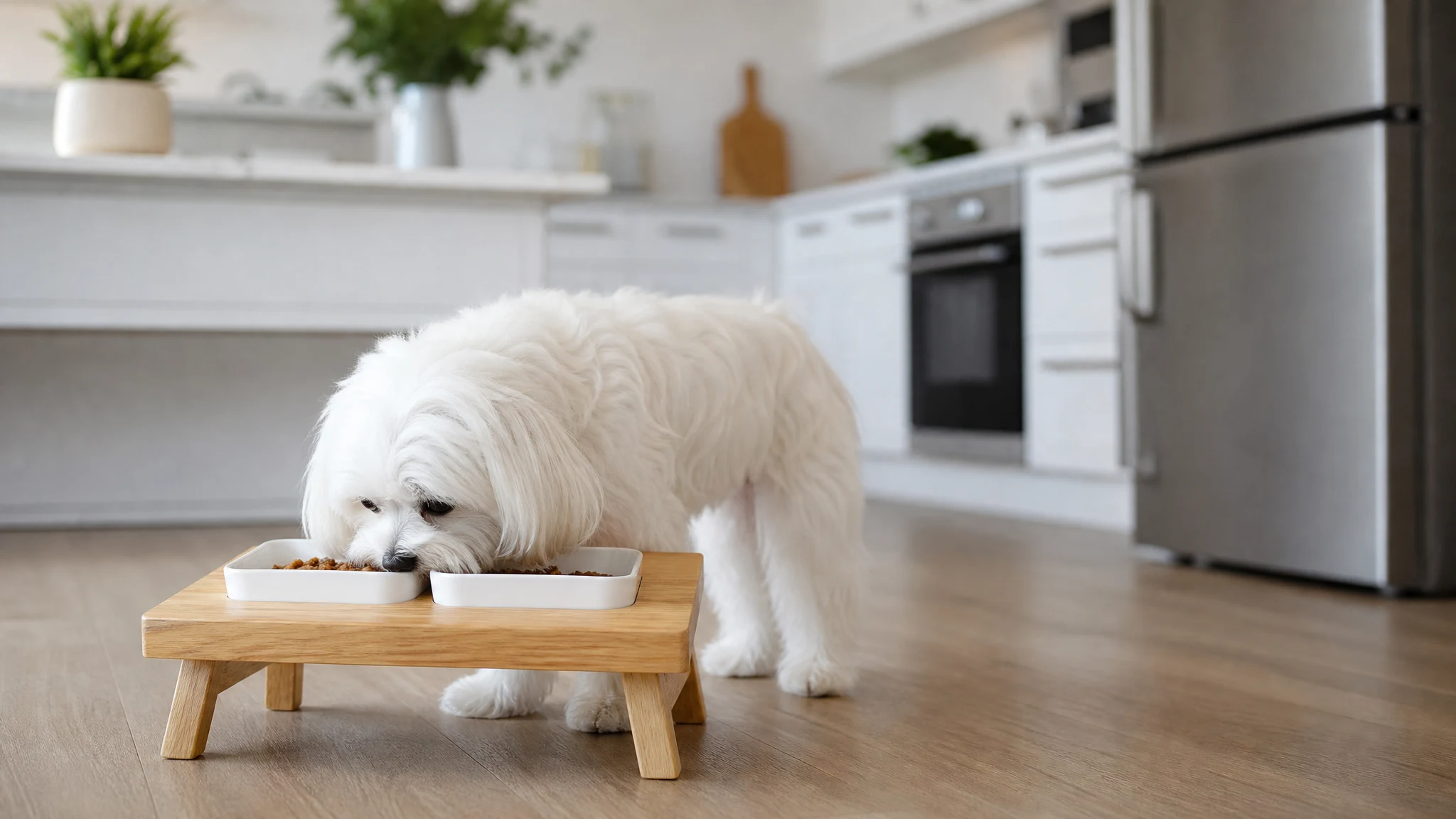
Your Maltese should be able to eat without stretching up or craning down. For most toy dogs, a bowl placed directly on a mat at floor level works. Some owners like a low stand for comfort.
None of the sources we use say that a raised bowl prevents a health problem, so treat height as a comfort choice. If your dog has trouble eating or swallowing, ask your veterinarian before changing the setup.
Step 3: Pick a quiet, fixed spot
Put the station on an easy-to-wipe floor, away from doorways, stairs and the washing machine. A corner works well because it gives a nervous small dog a sense of cover.
Keep it in the same place every day. A fixed spot helps your dog connect that area with meals, which supports the regular timing the breed guide mentions.
Step 4: Place water close by, but separate
Set the water bowl next to the food bowl, not inside the same tray. A Maltese with a long beard tends to drip, so a mat that has a raised edge helps.
Rinse and refill the water bowl each day. Wash both bowls with warm soapy water after meals, or at least daily.
Step 5: Measure each meal from the label
Use the measuring cup every time. With a dog this small, a few extra kibbles are a large share of the day's food.
Food brands print their own feeding guides. Treat these as starting points, not fixed rules. Here are examples from the brands' own pages:
| Food | Label guide for a small adult |
|---|---|
| Royal Canin Maltese Adult (dry) | At 4.4 lb (2 kg): 1/2 cup daily at low or medium activity, 5/8 cup at high activity. The page lists 317 kcal per cup. |
| VICTOR Hi-Pro Plus Small Breed Adult (dry) | 0.5 cup daily for a 5 lb dog. The page lists 360 kcal per cup. |
| Freshpet Small Dog Bite Size Chicken (fresh) | 1/2 to 1 cup daily for a 5 to 10 lb dog. The page lists 267 kcal per cup. |
The calorie counts differ a lot from one food to the next. That is why the same cup measure is not the same amount of food across brands. Always use the guide that comes with the food you actually buy.
Hill's says to adjust amounts as needed to maintain optimal weight, and to ask your veterinarian if you are unsure. That is sound advice for any brand. For a breakdown by age and weight, see our Maltese feeding chart by age and weight.
Step 6: Set a meal schedule and keep it
Choose set meal times and keep them steady from day to day. The Chewy breed guide ties regular meal timing to preventing low blood sugar in this breed. It does not give a number of meals per day, so ask your veterinarian what split suits your dog, especially a puppy.
Put the bowl down, let your dog eat, and pick it up after a short time. Free feeding makes portions hard to track.
Step 7: Plan treats and training rewards
The same breed guide says treats should not exceed 10% of daily calories. For a dog under 7 pounds, that is a very small amount. Use tiny pieces and count them as part of the day's food.
If you use food rewards for training, pull them from the daily portion. Keep training humane and reward-based, as the American Veterinary Society of Animal Behavior (AVSAB) recommends.
Step 8: Clean up after every meal
Wipe the muzzle and beard with a soft cloth after eating. Food left in long facial hair can stay damp and smell. Wipe the mat, and wash it regularly.
Store dry food in a sealed container and follow the brand's storage directions. For fresh foods, follow the brand's instructions for refrigeration and how long an opened pack keeps.
Common mistakes to avoid
- Using a bowl made for a bigger dog. Deep or heavy bowls make small dogs work too hard to reach food.
- Eyeballing portions. A small scoop error is a large percentage for a toy dog.
- Skipping meal times. Irregular meals work against the timing advice for this breed.
- Moving the station around. A constant spot is easier on your dog.
- Counting treats as free. They add up fast at this size.
- Switching foods suddenly. Ask the brand or your veterinarian how to change foods gradually.
- Treating a station as a health fix. A bowl setup does not treat or prevent any condition.
A note on diets and health questions
The FDA's investigation into a possible link between certain diets and canine dilated cardiomyopathy (DCM) has not identified a specific dietary cause. Its page, last updated December 23, 2022, calls the link complex and the work ongoing. If this worries you, talk to your veterinarian about your dog's food.
If your Maltese has a health condition, including any of those listed above, confirm amounts and food type with your veterinarian. Prescription diets are something only a veterinarian prescribes.
What to expect
A steady setup may make meals calmer and cleaner. It may also make it easier to notice changes in appetite and to keep portions consistent. Results vary by dog, and a station cannot promise any health outcome.
If your dog refuses meals, vomits, seems weak or shaky, or loses weight, call your veterinarian rather than adjusting the station.
How we compared the foods mentioned
We compared label and product-page data only. We did not run feeding trials or taste tests, and nothing here is a ranking. Check the brand pages for current ingredients and feeding guides.
Sources
- Chewy breed guide for the Maltese (adult weight, health issues, meal timing, treat limit)
- American Maltese Association, Health Information
- FDA Center for Veterinary Medicine, DCM investigation page
- Royal Canin, Maltese Adult product page
- VICTOR, Hi-Pro Plus Small Breed Adult product page
- Freshpet, Small Dog Bite Size Chicken Recipe product page
- Hill's Pet, Science Diet Adult Small & Mini product page