Choosing a Feeding Station for a Small Breed Like the Maltese
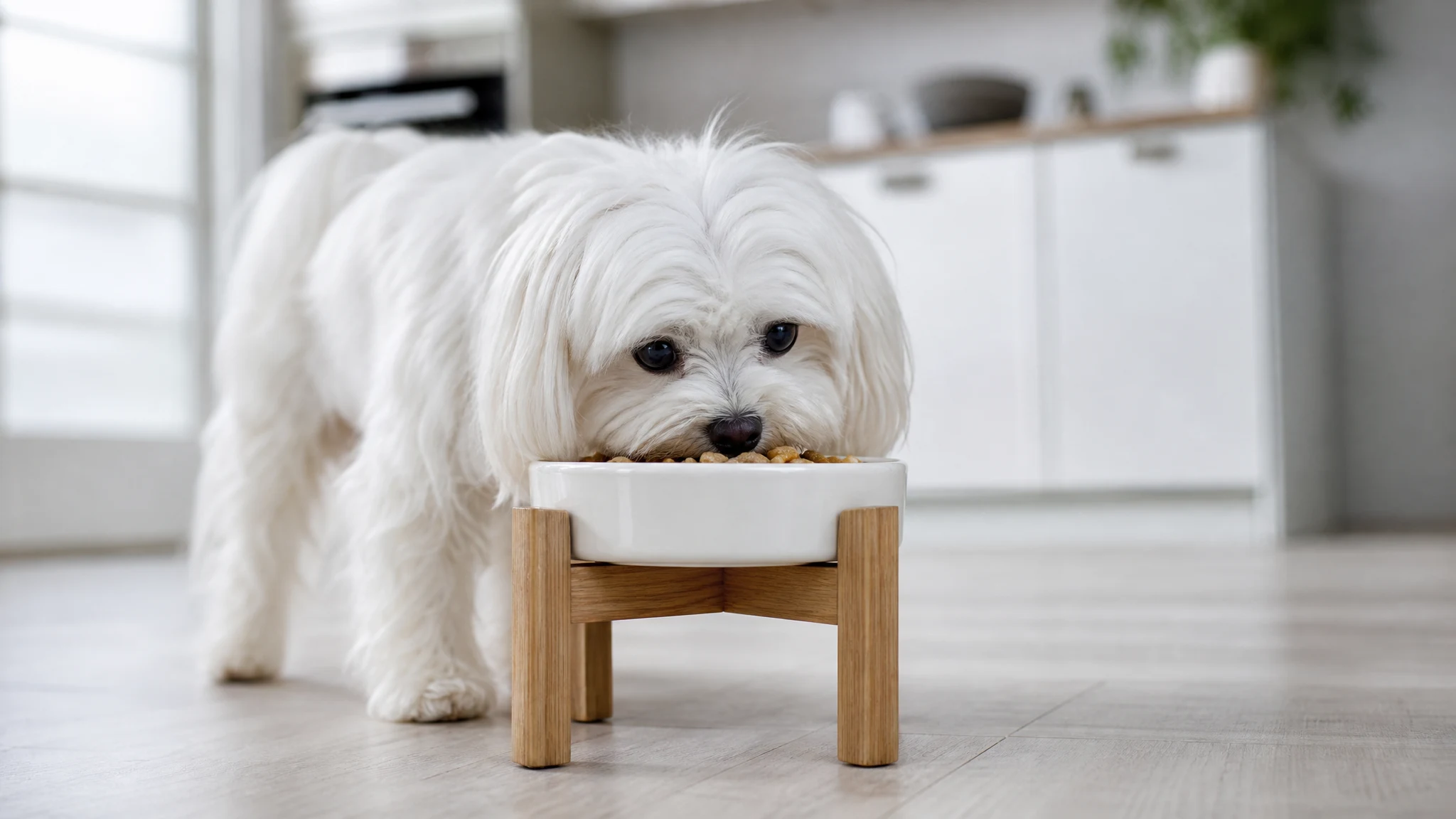
General nutrition information compiled from product labels and published sources, not veterinary advice. Your veterinarian is the right person to choose a diet for your dog, especially one with a health condition.
A dog feeding station is the spot where your dog eats and drinks. It usually has a food bowl, a water bowl, a mat, and sometimes a stand or a storage bin nearby. For a toy breed, the setup matters more than it seems. A Maltese is a small dog, and the gear that suits a Labrador can be awkward or wasteful for one that weighs under 7 pounds.
This guide walks through how to pick and set up a dog feeding station for a Maltese. It covers size, height, placement, measuring, and the mistakes that are easy to make. We did not test any bowls or stands ourselves. The steps below come from the breed and label information listed in the Sources section and from general common sense.
Why the Maltese needs a different setup
Chewy's breed guide lists the adult Maltese at under 7 pounds, which puts the breed in the toy size range. It also lists a typical life span of 12 to 15 years. That is a long time to eat from the same spot every day, so it is worth getting right.
The same guide lists hypoglycemia (low blood sugar) as a health issue in the breed. It says regular meal timing can help prevent it. A fixed, easy-to-reach feeding spot makes a steady schedule simpler to keep. It also lists luxating patella and says a healthy weight can help. That makes measuring food at the station a practical habit.
The American Maltese Association, the parent club of the breed, says the Maltese is relatively healthy when bought from a reputable breeder. It names no specific conditions on its health page. If your dog has a diagnosed condition, your veterinarian decides what and how to feed.
Materials you will need
- One food bowl sized for a very small muzzle
- One water bowl, kept separate from the food bowl
- A non-slip, wipeable mat
- A level measuring cup or a kitchen scale
- A lidded container for dry food, if you feed kibble
- A small notepad or phone note to log meals
- Optional: a low stand, only if your veterinarian agrees it suits your dog
Step-by-step: building your dog feeding station
Step 1: Check your dog's current weight and age
Weigh your dog first. A puppy and a 10-pound adult need very different amounts and, often, different bowl sizes. Weight, age and activity level are the three things most feeding guides use to set a daily amount.
Write the weight down. You will use it again in step 5. For a full breakdown by life stage, see our Maltese feeding chart by age and weight.
Step 2: Choose a shallow, small bowl
Pick a bowl that is wide and shallow rather than deep. A tiny muzzle should not have to push into a deep, narrow bowl to reach the food. Small kibble or small pieces also tend to scatter in a bowl that is too large.
Royal Canin's own product page says its Maltese adult kibble is custom shaped for the Maltese muzzle and scissor bite. It gives no dimensions. That tells you the shape of the food can matter, so look at the bowl and the food together. If you feed fresh food such as Freshpet's small dog recipe, which the brand describes as bite size pieces, a shallow dish works well too.
Heavy ceramic or stainless steel bowls with a rubber base are less likely to slide than light plastic ones. A lightweight dog can push a light bowl across the floor in seconds.
Step 3: Decide whether to raise the bowls
Many people assume a raised feeder is better. For a toy breed, a tall stand can be a poor fit, because the dog may have to stretch up awkwardly. Bowls on the floor, on a mat, are fine for most small dogs.
If you are considering a stand, keep it very low. Ask your veterinarian first, especially if your dog has a neck, throat or breathing concern. The breed guide lists tracheal collapse as a Maltese health issue, so if that applies to your dog, ask what head position is comfortable at mealtimes. Do not buy a raised feeder on the promise that it prevents a health problem. No source in our research supports that claim.
Step 4: Pick a quiet, stable location
Put the station on a hard, easy-to-clean floor away from foot traffic. A corner of the kitchen or a utility area often works. Avoid the doorway, the top of the stairs, and anywhere a bigger pet or a child will crowd your Maltese.
Keep the water bowl a few inches from the food bowl, not touching it. Place the mat under both so spills stay in one spot.
Use the same spot every day. A dog that knows where meals happen tends to settle faster, and you will notice sooner if your dog skips a meal.
Step 5: Set up measuring tools at the station
Keep the measuring cup or scale in the container or right beside it. Measuring at every meal is the easiest way to avoid slow weight creep in a very small dog, where a few extra pieces are a large share of the day.
Use label guides only as starting points. Here are a few examples taken from the brands' own pages:
- Royal Canin Breed Health Nutrition Maltese Adult lists daily cups by activity level. For a 4.4 pound (2 kg) dog it lists 1/2 cup at low and medium activity and 5/8 cup at high activity. The page lists 317 kcal ME per cup, calculated, as fed.
- VICTOR Hi-Pro Plus Small Breed Adult lists 0.5 cup daily for a 5 pound dog, with 360 kcal per cup.
- Freshpet Small Dog Bite Size Chicken Recipe lists 1/2 to 1 cup per day for dogs of 5 to 10 pounds, at 267 kcal per cup.
Notice that a cup of one food is not the same as a cup of another. The calories per cup differ, so never swap foods and keep the same scoop count. Check the new label and adjust.
Hill's lists calories at 357 kcal per cup for its Adult Small & Mini Chicken & Brown Rice Recipe, and tells owners to adjust amounts to maintain optimal weight and to ask a veterinarian if unsure. That is sound advice for any brand.
If your dog has a health condition, confirm the amount with your veterinarian before you rely on any chart.
Step 6: Set a steady meal schedule
Because the breed guide says regular meal timing can help with hypoglycemia, a set routine is worth building into the station. Many owners of toy dogs split the day's food into several small meals. The exact number and timing depend on your dog's age and health, so ask your veterinarian rather than guessing, particularly for a young puppy.
Keep a note at the station with meal times and amounts. It helps if more than one person feeds the dog.
Step 7: Plan for treats and extras
The breed guide says treats should not exceed 10% of daily calories. For a dog under 7 pounds, that is a very small number, so treat the training bits as part of the daily budget, not an extra. Store them away from the bowls so family members do not add them by habit.
Step 8: Clean on a schedule
Wash bowls and the mat with soap and hot water. Do it daily for bowls used with wet or fresh food, and refill water at least once a day. Wipe the container lid and scoop from time to time. Fresh foods have their own storage directions on the brand's page, so follow those.
Tips for a smoother setup
- Choose food that states it meets the AAFCO nutrient profile for your dog's life stage. The breed guide says the Maltese generally does well on commercial food that meets AAFCO standards for its life stage.
- Do not worry about large-breed puppy rules. The Maltese is far below the 70 pound adult weight where those rules apply.
- Introduce any new bowl or mat gradually. Some dogs hesitate at a new surface.
- Take photos of your dog's body shape every few weeks. They are easier to compare than memory.
- Watch how your dog uses the station. If food is regularly pushed out of the bowl, the bowl is probably the wrong shape.
Common mistakes to avoid
- Buying a bowl that is too big. It makes small portions look tiny, and it can tempt you to add more.
- Free feeding without measuring. Leaving food out all day makes it hard to see how much your dog actually ate.
- Using a coffee mug or a random scoop. Sizes vary. A proper measuring cup or a scale is more reliable.
- Changing foods suddenly. A new food has different calories per cup. Check the label and ask your veterinarian how to transition.
- Trusting marketing words. Terms such as "small breed" or "premium" are not a guarantee of anything. Read the AAFCO statement and the ingredient list.
- Skipping meals without noticing. In a toy breed, a missed meal is worth a note and, if it repeats, a call to your veterinarian.
What results to expect
A well-chosen dog feeding station may make mealtimes calmer and tidier, and measuring at the station may help you keep your dog's weight steady. A fixed routine could make it easier to spot changes in appetite early. Results vary from dog to dog, and a feeding station does not treat or prevent any health condition.
Our approach to this topic was to compare label data and published breed information. We did not run feeding trials or taste tests, so we cannot say which food your dog will prefer. Your veterinarian is the right person to decide the diet for your individual dog, including any special diets, which only a veterinarian prescribes.
A note on grain-free and heart concerns
You may see worries about diet and canine dilated cardiomyopathy (DCM). The FDA's investigation page says the agency has not identified a specific dietary cause and describes the link as complex. The latest update on that page was dated December 23, 2022, and the FDA said it does not plan further public updates until there is meaningful new scientific information. If you have questions about your dog's food, ask your veterinarian.
Quick setup checklist
- Weigh your dog and note the age.
- Choose a shallow bowl with a non-slip base.
- Decide on floor level or a low stand with your veterinarian's input.
- Place the station in a quiet spot on an easy-to-clean floor.
- Keep a measuring cup or scale at the station.
- Use label guides as starting points and confirm with your veterinarian for any health condition.
- Set regular meal times and log them.
- Count treats toward the daily calories.
- Clean bowls and the mat on a schedule.
For amounts at each life stage, return to the Maltese feeding chart by age and weight.
Sources
- American Maltese Association, Health Information
- FDA Center for Veterinary Medicine, investigation into a potential link between certain diets and canine dilated cardiomyopathy
- Royal Canin, Breed Health Nutrition Maltese Adult
- Hill's Pet, Science Diet Adult Small & Mini Chicken & Brown Rice Recipe
- VICTOR, Hi-Pro Plus Small Breed Adult
- Freshpet, Small Dog Bite Size Chicken Recipe
- Chewy breed guide for the Maltese (secondary source for weight, life span, health issues and feeding notes)