Is Health Extension Dog Food a Good Fit for a Maltese?
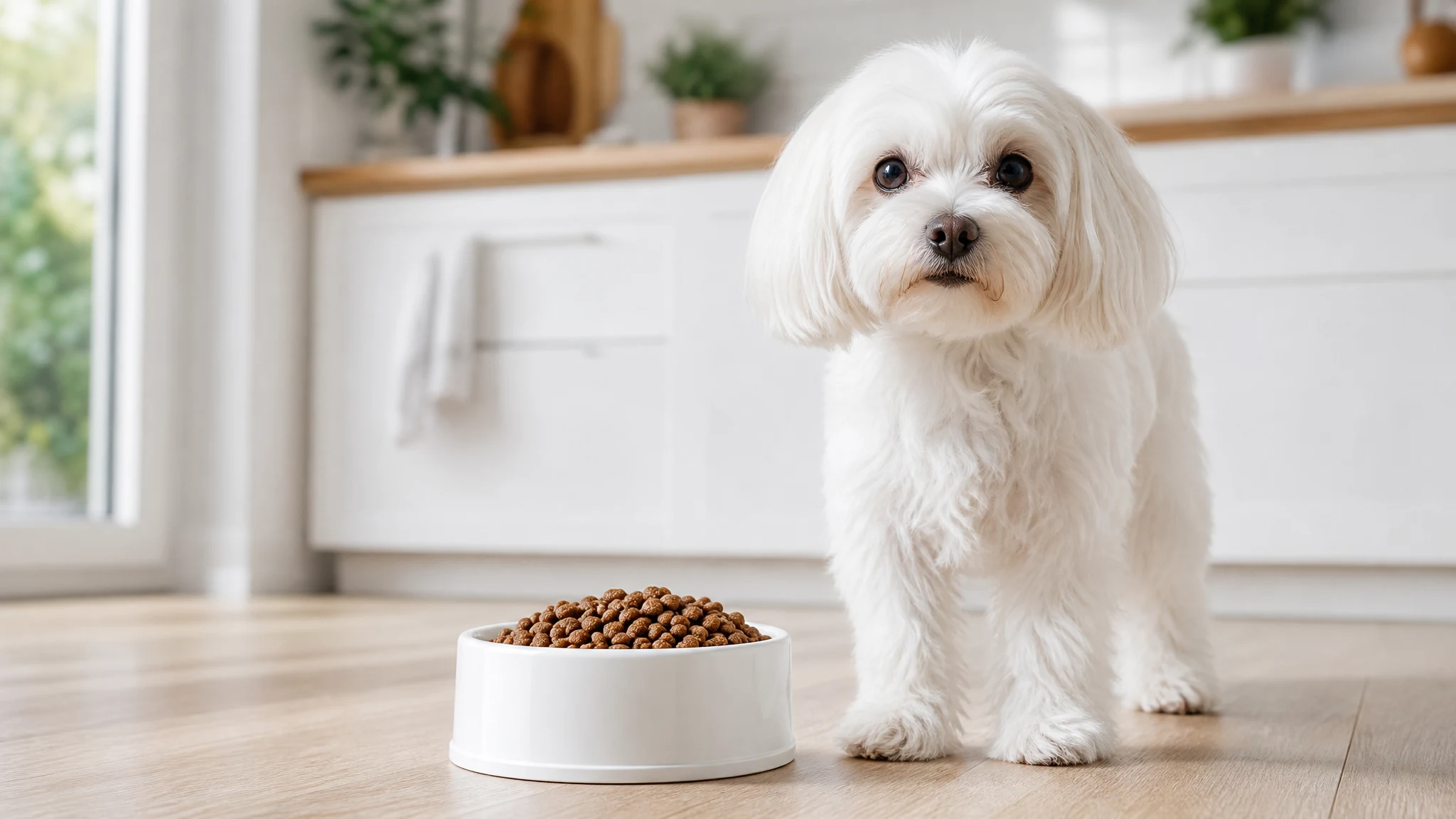
General nutrition information compiled from product labels and published sources, not veterinary advice. Your veterinarian is the right person to choose a diet for your dog, especially one with a health condition.
Plenty of Maltese owners ask about health extension dog food, usually after seeing it recommended in a forum or on a shelf. The honest answer is that no brand is a good fit or a bad fit in the abstract. What matters is what is printed on the specific bag and whether it matches a small dog's needs.
This guide walks you through a repeatable label check. You can use it on any food for a Maltese, including this one. We compared label data only. We did not run feeding trials or taste tests, and nothing here says a food will prevent or treat any condition.
Why a Maltese Needs a Slightly Different Label Check
A retailer's breed guide, published by Chewy, lists the Maltese as a toy breed with an adult weight under 7 pounds and a life expectancy of 12 to 15 years. It is a secondary source, so treat the numbers as general guidance.
That guide also lists several health issues in the breed, and some of them connect to feeding:
- Hypoglycemia (low blood sugar): the guide says regular meal timing can help prevent it.
- Luxating patella: the guide says keeping a healthy weight can help.
- Tracheal collapse: the guide recommends a harness over a collar. This is about walking gear, not food.
The American Maltese Association, the AKC parent club, says the breed is relatively healthy when bought from a reputable breeder. It names no specific conditions on its health page. Your veterinarian decides what is right for your individual dog.
The Chewy guide also says the breed generally does well on commercial food that meets AAFCO standards for its life stage, and that treats should stay under 10% of daily calories.
Materials You Need
- The bag or the brand's own product page for the exact recipe you are considering. Health Extension makes more than one recipe, so check the one you actually plan to buy.
- Your Maltese's current weight and age.
- Your veterinarian's notes on body condition, and any diagnosed conditions.
- A kitchen scale or a level measuring cup.
- A notepad or phone note for writing down the label numbers.
Step-by-Step: Checking Any Food for a Maltese
Step 1: Find the AAFCO statement
Look for a sentence saying the food is formulated to meet, or tested to meet, the AAFCO Dog Food Nutrient Profiles. Then read which life stage it names. The usual options are maintenance (adult), growth (puppy), or all life stages.
Match this to your dog. A puppy needs a growth or all life stages statement. An adult can eat a maintenance or all life stages food.
Also notice the wording. Some labels say the food was proven in animal feeding tests using AAFCO procedures. Others say it was formulated to meet the nutrient profiles. Those are two different methods, and the label tells you which one applies.
Step 2: Ignore the large-breed clause
Some foods say they cover all life stages including growth of large-size dogs (70 pounds or more as an adult). Whole Dog Journal explains that large-breed growth foods cap calcium lower than other dog foods. A Maltese is far below 70 pounds, so large-breed puppy rules do not apply. An "all life stages" food that excludes large-size growth is the more typical wording on small-dog formulas.
Step 3: Read the first five ingredients
Ingredients are listed by weight before cooking. The first five give a rough picture of the recipe. Write them down exactly as printed. Do not judge a food by one ingredient name alone. Marketing words on the front of the bag are not the same as what the ingredient panel says.
Step 4: Record protein, fat and fiber
Find the guaranteed analysis. It lists minimum protein and fat and maximum fiber, as fed. Some brands, such as Hill's, show dry matter averages on their product pages instead of minimums. Do not compare a dry matter average directly with an as-fed minimum. Note which kind of number you have.
Step 5: Find calories per cup
For a dog under 7 pounds, calories per cup matter more than almost any other number. A small difference per cup becomes a large difference when a dog eats only half a cup a day. If the brand page does not list kcal per cup, ask the brand directly before you buy.
Step 6: Check kibble size and texture
Brands rarely give kibble dimensions. Royal Canin describes a custom kibble shaped for the Maltese muzzle and scissor bite, without stating a size. Hill's describes some small-breed senior recipes as having nibble-size kibble. If the page does not say, check with the brand. Your own dog's chewing comfort is the real test.
Step 7: Use the feeding chart as a starting point
Feeding charts on bags and brand pages are starting points, not prescriptions. Hill's says to adjust amounts to maintain optimal weight and to ask your veterinarian if you are unsure. Weigh your dog every few weeks and adjust with your vet's guidance.
Where Health Extension Fits In
Apply the seven steps to the recipe you are considering. Pull its AAFCO statement, ingredients, protein, fat, calories per cup and feeding chart from the brand's own page or the bag. We do not list label figures for health extension dog food here, so confirm every number with the brand directly rather than relying on a third party's summary.
Then put your notes next to the examples below. These come from the brands' own pages for foods aimed at small dogs.
| Food | AAFCO statement | Protein / fat | Calories per cup | First ingredients |
|---|---|---|---|---|
| Royal Canin Breed Health Nutrition Maltese Adult | Maintenance; Maltese 10 months and older | 22% min protein, 16% min fat | 317 kcal ME | Brewers rice, corn, chicken by-product meal, chicken fat, wheat gluten |
| Hill's Science Diet Adult Small & Mini Chicken & Brown Rice | Adult maintenance, animal feeding tests | Dry matter averages: 25% protein, 15.3% fat | 357 kcal | Chicken, brown rice, whole grain wheat, whole grain corn, brewers rice |
| VICTOR Hi-Pro Plus Small Breed Adult | All life stages, except growth of large-size dogs | 30% min protein, 14% min fat | 360 kcal | Beef, chicken meal, beef meal, brown rice, whole grain millet |
The spread in calories per cup is modest here, but protein differs a lot. A higher number is not automatically better for a toy dog. It is simply a number to discuss with your vet.
For a wider comparison, see our Maltese dog foods compared by label data.
Tips
- Feed on a schedule. Because of the hypoglycemia concern the breed guide mentions, regular meal times are worth discussing with your vet, especially for puppies.
- Count treats. Keep them under 10% of daily calories, as the breed guide advises.
- Switch gradually. Mix a little new food into the old over about a week, and watch stools and appetite. Ask your vet if anything looks off.
- Weigh, do not eyeball. A scoop that looks small can be a large share of a toy dog's day.
- Change one thing at a time. New food and new treats together make it hard to tell what caused a reaction.
Common Mistakes to Avoid
- Choosing by brand reputation alone. The label for the exact recipe is what counts.
- Comparing mismatched numbers. Dry matter averages and as-fed minimums are not the same measurement.
- Feeding the wrong life stage. A maintenance food is not a puppy food.
- Assuming grain-free means better. The FDA's investigation into diets and canine dilated cardiomyopathy (DCM) has not identified a specific dietary cause. The FDA's last update on that page was dated December 23, 2022, and it describes the link as complex and ongoing. Talk with your veterinarian before choosing based on that issue.
- Treating food as medicine. No food on a store shelf treats or prevents a health condition. Only a veterinarian prescribes therapeutic diets.
Expected Results
If a food suits your Maltese, you may notice steady appetite, comfortable stools and a stable body weight over several weeks. Results vary from dog to dog, and these signs do not prove a food is ideal.
If your dog gains or loses weight, refuses meals, or has ongoing digestive upset, contact your veterinarian. A change of food may or may not be the answer.
The bottom line is that health extension dog food could be a reasonable option if its label for the recipe you choose matches your dog's life stage, calorie needs and your vet's advice. The label check, not the brand name, is what tells you.