Best Puppy Food for Maltese Puppies
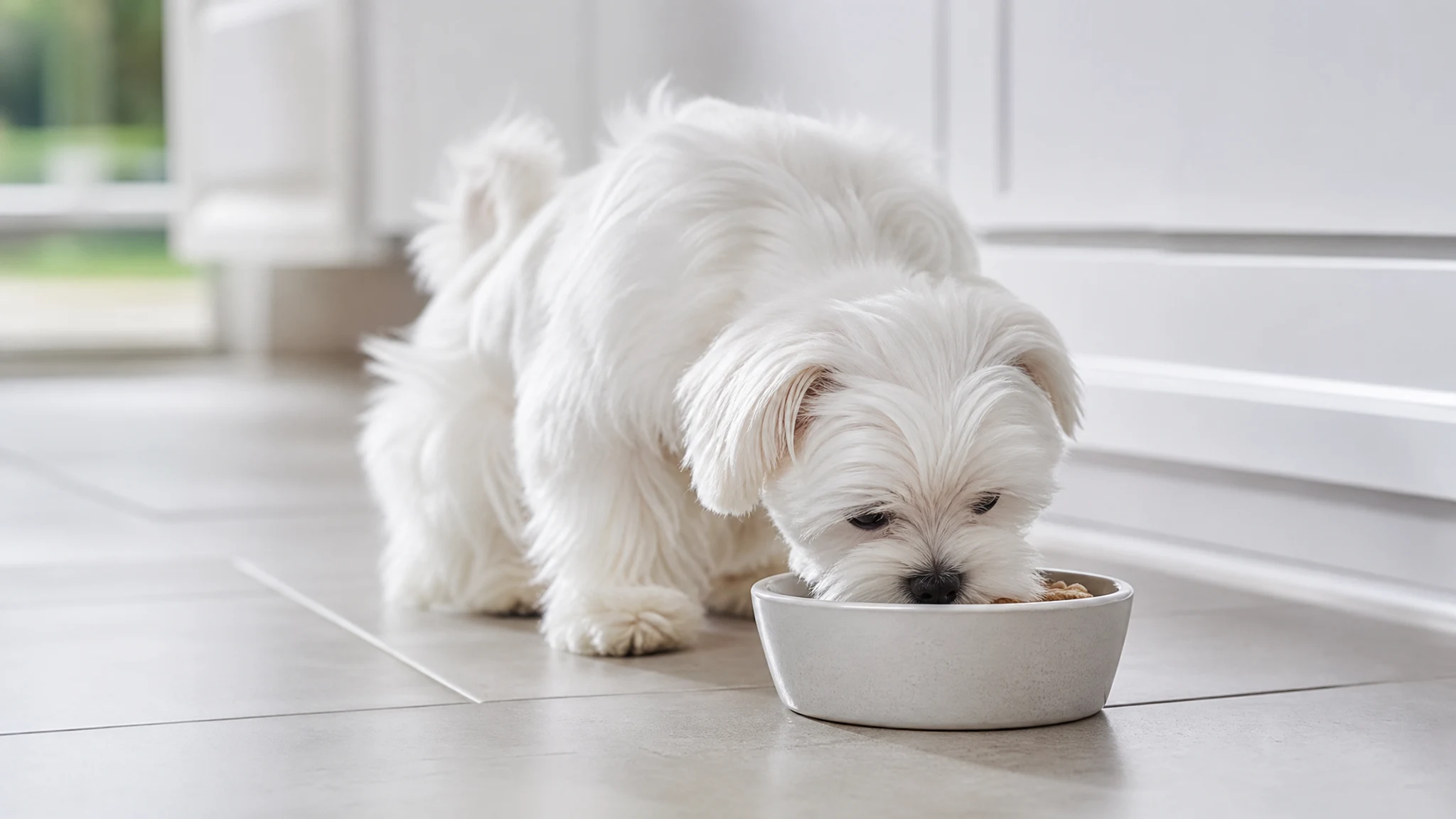
General nutrition information compiled from product labels and published sources, not veterinary advice. Your veterinarian is the right person to choose a diet for your dog, especially one with a health condition.
Choosing the best puppy food for Maltese puppies mostly comes down to reading one sentence on the bag and a few numbers beside it. A Maltese puppy is tiny, grows fast, and has little room for error in a bowl of food. The label is the best evidence you can check yourself.
This guide explains what to look for, how to compare, and which products in our comparison have a label statement that covers growth. It also covers red flags and where to buy. We compared label data from each brand's own page. We did not run feeding trials or taste tests, and we have not fed any of these foods to dogs.
Start with the Maltese, not the marketing
The Chewy breed guide lists the adult Maltese at under 7 pounds, which makes it a toy breed. It gives a life expectancy of 12 to 15 years. The same guide says the breed generally does well on commercial food that meets AAFCO standards for its life stage, and it mentions small-breed formulas.
The American Maltese Association, the parent club, says the breed is relatively healthy when bought from a reputable breeder. It names no specific food requirements on its health page. So the best food for a Maltese puppy is not a secret formula. It is a complete and balanced puppy food in a size and form your dog can eat, fed in amounts your veterinarian agrees with.
What to look for: quality indicators
1. A growth statement from AAFCO
This is the first check. Look for the nutritional adequacy statement, usually in small print near the ingredients. For a puppy it should say the food is formulated for growth, or for all life stages. A statement that says only "for maintenance of adult dogs" is not a puppy food, however small the kibble.
Some statements say the food was formulated to meet AAFCO nutrient profiles. Others say animal feeding tests substantiate it. Both are acceptable ways to support "complete and balanced." They are different methods, and the label will say which one was used.
2. The large-breed clause, and why it does not matter here
Whole Dog Journal explains that AAFCO treats large-breed puppies as those expected to reach 70 pounds or more as adults. It also reports that growth diets for large breeds are capped at 1.8% calcium on a dry-matter basis, against 2.5% for other dogs. Foods that meet that rule carry the clause "including growth of large-size dogs (70 pounds or more as an adult)."
A Maltese is far below that weight, so large-breed growth rules do not apply. A food that says "except for growth of large size dogs" is not a problem for this breed. Some all-life-stages foods do include the large-size clause, and they also cover a Maltese puppy.
3. A named animal protein early in the ingredients
Ingredients are listed by weight before cooking, so water-heavy ingredients sit high on the list. Look at the first five. Specific names such as chicken, beef or chicken meal tell you more than vague ones. Ingredients are not a quality score, though. They are a way to see what the food is built from.
4. Calories per cup, stated clearly
A Maltese puppy eats very small amounts. A food with more calories per cup means a smaller portion, and an overfed toy puppy gains weight quickly. A clear calorie figure lets you compare foods on a like-for-like basis.
5. A kibble or piece size that suits a small mouth
Brands often say "small bite" without giving dimensions. In our comparison, none of the puppy foods states a kibble size in numbers. If texture matters to you, ask the brand directly.
Key features to compare
Once the growth statement checks out, compare these points side by side:
- Form: dry, wet or fresh. Moisture changes the numbers, so only compare protein and fat percentages between foods of the same form.
- Size focus: some foods are made for small or mini breeds. Others are all-life-stages foods without a size focus.
- Calories: per cup for dry and fresh foods, per can for wet.
- Feeding guide: how low the chart goes for a very small puppy.
- Life stage language: "growth," "puppy," or "all life stages."
Top picks by food type
We have no reliable price data for these foods, so we cannot sort them by price. Cost depends on the store, the pack size and your puppy's weight. Check each brand's page for current pricing. We have grouped the options by form instead, which is the main thing that changes cost and handling. A dry food is the usual starting point for small, steady portions. Fresh foods are a different style of feeding.
Only foods whose label statement covers growth are included. The same brands make adult formulas in our broader comparison of foods for Maltese by label data.
Dry: VICTOR Hi-Pro Plus Small & Medium Breed Puppy
The VICTOR product page lists a statement for all life stages, except for growth of large size dogs (70 lb. or more as an adult). That covers growth in a Maltese.
- First five ingredients: beef, chicken, beef meal, chicken meal, whole grain sorghum.
- Minimums and maximums: protein 30% min, fat 18% min, fiber 5% max.
- Calories: 383 kcal per cup.
- Feeding guide: the page lists 0.70 cups per day for a 2 lb puppy aged 6 to 11 weeks. Treat that as a starting point.
- Kibble size: not stated in numbers.
It is not grain-free. It is calorie dense, so measure portions carefully.
Wet: Hill's Science Diet Puppy Small & Mini Beef & Barley Entree
Hill's states that animal feeding tests using AAFCO procedures substantiate complete and balanced nutrition for growing puppies and for gestating or lactating adult female dogs.
- First five ingredients: water, beef, chicken, whole grain corn, cracked pearled barley.
- Dry matter averages: protein 28.5%, fat 22.5%, crude fiber 2.1%. These are averages, not label minimums.
- Calories: 223 kcal per 5.8 oz can. That is per can, not per cup.
- Feeding guide: cans per day by weight and age on the page.
The web address for this product mentions chicken, but the page we read described the Beef & Barley entree. Confirm the exact recipe on the can before you buy.
Fresh: Freshpet Small Dog Bite Size Chicken Recipe
Freshpet states the food is formulated for all life stages except the growth of large size dogs (70 lbs or more as an adult).
- First five ingredients: chicken, chicken liver, carrots, cranberries, eggs.
- Label figures: protein 16% min, fat 12% min, fiber 1.5% max.
- Calories: 267 kcal per cup.
- Feeding guide: 1/2 to 1 cup per day for dogs of 5 to 10 lb. A very young puppy may weigh less than that, so ask the brand or your veterinarian.
The pieces are bite size, not kibble. The page did not state whether the recipe is grain-free.
Fresh: Nom Nom Chicken Cuisine
Nom Nom states the recipe meets AAFCO profiles for all life stages, including growth of large size dogs (70 lb. or more as an adult). It is not size-specific.
- First five ingredients: chicken, sweet potatoes, squash, spinach, dicalcium phosphate.
- Label figures: protein 6.5% min, fat 4.5% min, fiber 3.5% max.
- Calories: 244 kcal per cup, calculated.
- Feeding guide: the page points to a daily feeding guide for a full Nom Nom diet.
Fresh: JustFoodForDogs Pantry Fresh Chicken & Rice Recipe
JustFoodForDogs states the recipe is formulated for all life stages, including growth of large size dogs (70 lb. or more as an adult). It is not size-specific.
- First five ingredients: chicken breast, chicken thighs, chicken liver, long-grain white rice, kale.
- Label figures: protein 6.5% min, fat 2.5% min, fiber 1.0% max.
- Calories: 387.5 kcal ME per 12.5 oz pack, or 31 kcal ME per ounce. No per-cup value is listed.
- Feeding guide: no written amounts. The page points to a feeding tool.
Side-by-side label data
| Food | Form | Growth statement | Protein min | Fat min | Calories |
|---|---|---|---|---|---|
| VICTOR Hi-Pro Plus Small & Medium Breed Puppy | Dry | All life stages, except large-size growth | 30% | 18% | 383 kcal per cup |
| Hill's Science Diet Puppy Small & Mini Beef & Barley | Wet | Growth (feeding tests) | 28.5% dry matter average | 22.5% dry matter average | 223 kcal per 5.8 oz can |
| Freshpet Small Dog Bite Size Chicken | Fresh | All life stages, except large-size growth | 16% | 12% | 267 kcal per cup |
| Nom Nom Chicken Cuisine | Fresh | All life stages, including large-size growth | 6.5% | 4.5% | 244 kcal per cup |
| JustFoodForDogs Pantry Fresh Chicken & Rice | Fresh | All life stages, including large-size growth | 6.5% | 2.5% | 387.5 kcal per 12.5 oz pack |
Do not rank these by protein percentage alone. Fresh and wet foods contain a lot of water, which makes their as-fed percentages look low next to dry food. Hill's gives dry matter averages rather than minimums, so its row is not a direct match for the others.
One food to check yourself
Royal Canin makes a Size Health Nutrition Small Puppy dry food for puppies up to 10 months, with an expected adult weight of 9 to 22 lb. A Maltese is below that range. We could not capture the full AAFCO statement from the page, so we have not listed it as a pick. Read the statement on the bag, or ask Royal Canin, before choosing it. The brand also makes a Maltese-specific adult food, covered in our comparison linked above.
Growth, feeding times and when to switch
Because the Maltese is so small, the large-breed growth rules above do not apply. The practical question is portion size and meal timing.
The Chewy breed guide lists hypoglycemia, or low blood sugar, as a Maltese health issue and says regular meal timing can help. It also lists luxating patella and says a healthy weight can help. A veterinarian decides what is right for an individual puppy. Ask yours how many meals a day to offer. Many owners of toy breeds split a day's food into several small meals, but your veterinarian should confirm the schedule for your puppy.
Use label feeding guides as starting points, then adjust to your puppy's body condition with your veterinarian's help. Weigh portions if you can. A few extra kibbles matter in a dog this size.
The Chewy guide also says treats should not exceed 10% of daily calories. Count training treats in that total.
We found no source in our research that gives a firm age at which a Maltese should move to adult food. Royal Canin's own Maltese Adult page says that product is for Maltese 10 months and older, and its Small Puppy page says puppy up to 10 months. Those figures apply to Royal Canin's products. For any other food, ask your veterinarian and check the brand's page.
Red flags to avoid
- No adequacy statement. If you cannot find "complete and balanced" and a life stage, move on.
- Maintenance only. An adult maintenance statement does not cover a growing puppy.
- Health claims on the front. A food cannot be said to prevent or treat hip problems, allergies, heart disease or bloat. Be wary of packaging that suggests it.
- Breed-specific hype with thin detail. A Maltese on the bag is not a nutritional reason by itself. Read the statement and the numbers.
- Grain-free as a selling point. The FDA says it has not identified a specific dietary cause for dilated cardiomyopathy in dogs, and that the diet link is complex. Its last update was dated December 23, 2022, and it said it did not plan further public updates without meaningful new scientific information. Ask your veterinarian rather than choosing on this basis.
- Unclear calories. If you cannot work out how much to feed, you cannot control weight.
- Recipe changes without notice. Compare the label on the bag in your hands with the website each time you buy.
Where to buy
Start with the brand's own product page. It lists the current ingredients and statement, and it is where to look for stockists or ordering. Local pet shops and your veterinary clinic may carry some of these foods. Availability varies, and we cannot say which stores stock which product.
When the food arrives, read the label on the package and compare it with the page. Buy a small amount first. A new food should be introduced gradually, and a veterinarian can advise on how fast to switch.
A simple checklist
- Confirm a growth or all-life-stages statement.
- Note whether it excludes large-size growth. For a Maltese that is fine.
- Compare calories, not just protein.
- Check the feeding chart reaches your puppy's current weight.
- Ask your veterinarian about portions, meals per day, and when to switch to adult food.
Sources
- American Maltese Association, Health Information
- FDA Center for Veterinary Medicine, DCM investigation page
- Whole Dog Journal, large-breed puppy food
- Whole Dog Journal, nutritional adequacy statements
- VICTOR Hi-Pro Plus Small & Medium Breed Puppy
- Hill's Science Diet Puppy Small & Mini
- Freshpet Small Dog Bite Size Chicken Recipe
- Nom Nom Chicken Cuisine
- JustFoodForDogs Pantry Fresh Chicken & Rice Recipe
- Royal Canin Small Puppy
- Royal Canin Breed Health Nutrition Maltese Adult